


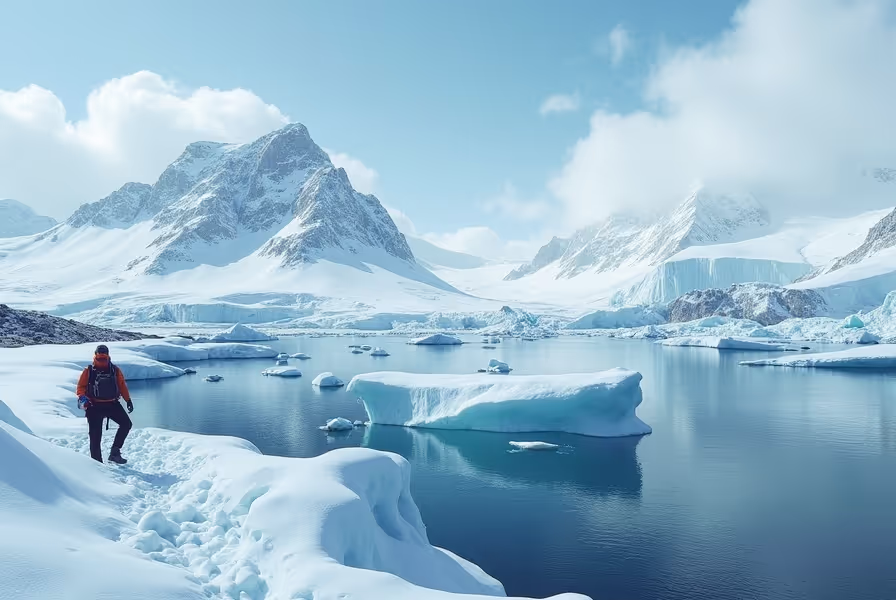
Exploring Higher Education in Antarctica: Reality vs. Myth
Antarctica is a land of extreme cold, remote beauty, and unique scientific discovery. Many students and academics wonder if there are colleges or universities in Antarctica. Let’s break down the facts about educational institutions, research stations, and academic programs in this intriguing continent.
Does Antarctica Have Colleges or Universities?
There are no traditional colleges or universities in Antarctica. This polar region is governed by the Antarctic Treaty System, which prioritizes scientific research and environmental preservation. Permanent communities and standard educational institutions are not found here.
However, Antarctica is a hub for international research and specialized academic programs. If you’re interested in advanced study, you’ll find unique educational opportunities through scientific expeditions and international collaborations.
Why Aren’t There Permanent Colleges in Antarctica?
- Harsh Climate: Temperatures can drop below -60°C, making daily life challenging.
- Remote Location: Antarctica is isolated with limited transportation options.
- Environmental Regulations: The Antarctic Treaty restricts non-essential human activity to protect the environment.
- No Permanent Population: Only temporary residents (scientists and support staff) stay at research stations, usually for seasonal or year-long rotations.
Academic Presence: Research Stations as Learning Hubs
While there are no degree-granting institutions, Antarctica hosts more than 70 research stations. These stations, owned and operated by various countries, act as the backbone of scientific study and offer valuable hands-on education and training for researchers and students.
Some major research stations include:
- McMurdo Station (United States): The largest station, serving as a logistical and research center.
- Amundsen-Scott South Pole Station (United States): Located at the geographic South Pole, focusing on atmospheric and astronomical study.
- Concordia Station (France and Italy): Specializes in astrophysics, glaciology, and human biomedical research.
- Rothera Research Station (United Kingdom): Marine biology and geology research.
- Novolazarevskaya Station (Russia): Supports multidisciplinary research activities.
Educational and Academic Programs Involving Antarctica
You will not find undergraduate or graduate programs based in Antarctica itself. However, many universities worldwide offer Antarctica-focused courses, credited fieldwork, and specialized polar research programs in collaboration with polar science institutes.
- Field Research Programs: Graduate students and select undergraduates can join Antarctic research projects as part of their degree programs.
- Distance Learning and Virtual Programs: Courses or seminars on polar science, climate change, and Antarctic ecology are offered by major institutions.
- Study Abroad Opportunities: Some universities have exchange programs or partnerships that allow students to join expeditions or short-term study trips to Antarctica.
- Summer Research Expeditions: Government agencies like the National Science Foundation (NSF) fund U.S. students and researchers for seasonal Antarctic research.
Some noteworthy examples are:
- Australian Antarctic Program: Includes research opportunities and internships for university students.
- British Antarctic Survey (BAS): Offers training and research placements for graduate students and new scientists.
- PolarTREC: Engages K-12 educators and students in real-time polar science research.
How Can You Study or Work in Antarctica?
If you want a taste of Antarctic academia, here are steps to get involved:
- Major in fields like Earth sciences, biology, oceanography, environmental science, glaciology, or atmospheric studies.
- Participate in university research projects with a polar or Antarctic focus.
- Apply for internships, fellowships, or assistant positions through government polar programs.
- Engage with organizations like NSF, BAS, or the Australian Antarctic Division for research trips.
- Join educational trips or outreach programs occasionally organized by research teams.
Remember, life and work in Antarctica demand preparation, adaptability, and a strong commitment to science.
International Collaboration in Antarctic Academic Research
Antarctica is unique, not only for its scientific mysteries but for its model of peaceful global collaboration. The Antarctic Treaty encourages data sharing, cooperative expeditions, and mutual support among nations.
Key points about international academic research in Antarctica include:
- Researchers from over 30 countries participate in Antarctic science.
- Major initiatives cover climate change, glaciology, meteorology, marine biology, and astrophysics.
- Shared data and resources are fundamental to Antarctic endeavors, supporting both seasoned scientists and emerging student researchers.
Antarctica’s Contribution to Global Academic Progress
Despite having no traditional colleges, Antarctica plays a vital role in global education:
- It is a living laboratory for advanced scientific study.
- It drives breakthroughs in understanding climate change, ice dynamics, and ecosystems.
- It provides rare fieldwork and real-world STEM experience for students and early-career scientists.
Frequently Asked Questions: Antarctica’s Educational and Academic Landscape
Are there any colleges or universities based in Antarctica?
No, there are no traditional colleges or universities in Antarctica. The continent is dedicated to scientific research, with no permanent educational institutions. All academic programs happen through research stations or visiting university teams.
Can students study or take courses in Antarctica?
Students cannot enroll in full-time courses or degree programs in Antarctica. However, many universities offer opportunities to participate in research, field trips, or internships at Antarctic research stations as part of their academic training.
What is the academic presence like in Antarctica?
The academic presence in Antarctica centers on scientific research conducted at more than 70 international research stations. Researchers, including graduate students, conduct experiments and gather data for universities or national agencies back home.
Who can apply to work or study at an Antarctic research station?
Most Antarctic research station positions are open to scientists, engineers, and graduate students selected by national research programs or universities. Selection is competitive and requires relevant academic experience, physical health, and the ability to handle remote environments.
Can undergraduate students visit or research in Antarctica?
It is rare but possible for undergraduate students to join Antarctic research, usually through special university programs, internships, or assistantships supported by national science foundations or polar research agencies.
What are the main academic fields of research in Antarctica?
The main academic fields include glaciology, climatology, biology, oceanography, meteorology, geology, and astrophysics. Climate change research is especially popular and important.
How do international researchers collaborate in Antarctica?
International researchers collaborate by sharing data, co-authoring scientific papers, joining joint expeditions, and supporting each other’s research equipment and logistics under the Antarctic Treaty System’s cooperative guidelines.




.svg)


