


Best Archeology Degrees in Sedona: 2026 Comprehensive Guide
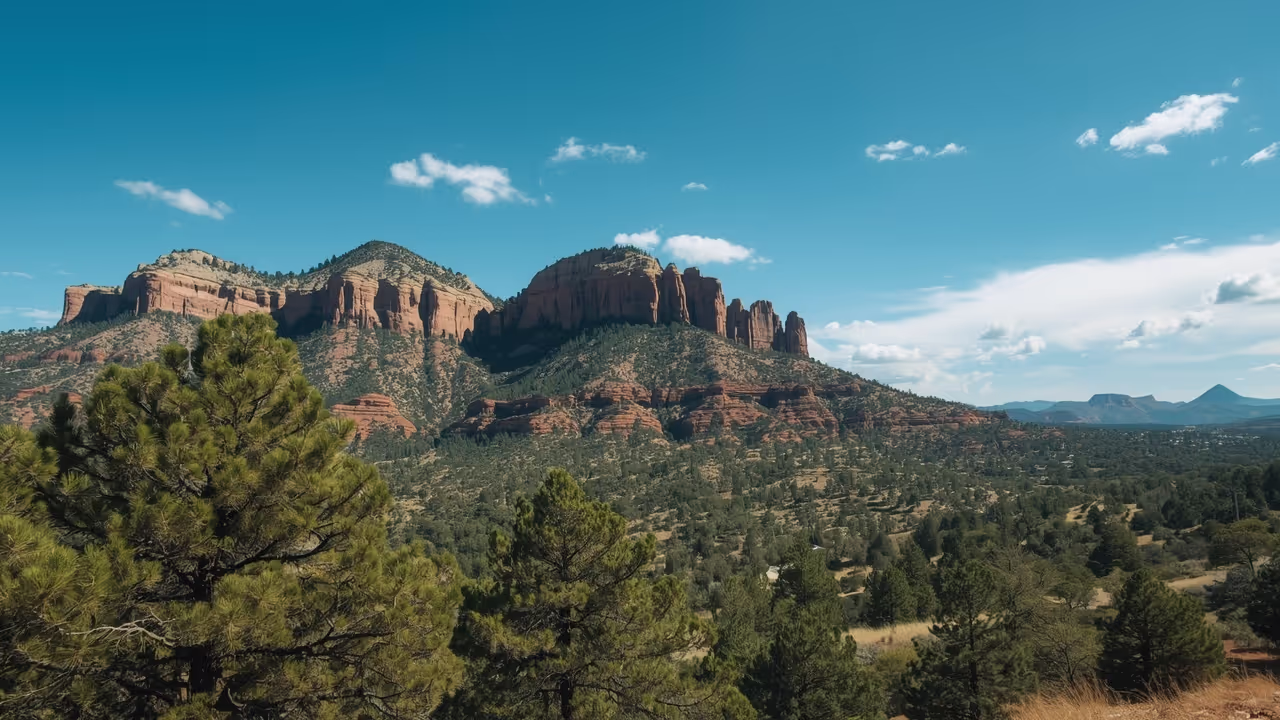
Sedona, Arizona is world‑renowned for its red rock landscapes, cliff dwellings, and proximity to some of the most significant Native American archaeological sites in the Southwest. While Sedona itself does not host a large research university with a standalone archaeology department, it sits within reach of several top-ranked archaeology and anthropology programs in Arizona.
This guide ranks and compares the best archaeology degrees near Sedona, focusing on academic quality, fieldwork access, research strength, cost, and local career opportunities.
Key Takeaways
- Sedona does not have a major four-year archaeology university, but top programs are within 2 hours.
- Northern Arizona University (NAU) is the closest and strongest option for Southwestern archaeology.
- University of Arizona offers nationally ranked graduate research programs.
- Arizona State University provides strong lab research and cultural resource management pathways.
- Students benefit from direct access to Sinagua, Hopi, Navajo, and Ancestral Puebloan sites.
What to Look for in an Archaeology Degree Near Sedona
Choosing the right archaeology program requires more than just rankings. In Northern Arizona, the most important factors include:
1. Southwestern Specialization
The Sedona region is rich in prehistoric Southwestern cultures. Strong programs emphasize:
- Desert archaeology
- Ancestral Puebloan studies
- Indigenous community collaboration
- Cultural resource management (CRM)
2. Fieldwork Access
Hands-on excavation and survey experience is essential. Programs near Sedona benefit from proximity to:
- Montezuma Castle National Monument
- Tuzigoot National Monument
- Walnut Canyon
- Coconino National Forest sites
3. Research Facilities
Top programs offer archaeology labs, GIS facilities, artifact analysis labs, and museum collections.
4. Career Outcomes
Graduates commonly pursue careers in:
- Federal and state land management agencies
- Cultural resource management firms
- Museums and heritage centers
- Academic research and teaching
Top Archaeology Degree Programs Near Sedona
UniversityDistance from SedonaDegree LevelsBest ForNorthern Arizona University (NAU)30 miles (Flagstaff)BA, MASouthwestern fieldwork and tribal collaborationArizona State University (ASU)120 miles (Tempe)BA, MA, PhDResearch labs and CRM pathwaysUniversity of Arizona (UA)220 miles (Tucson)BA, MA, PhDTop-tier graduate researchEmbry-Riddle (with Anthropology minor)60 miles (Prescott)Minor optionsInterdisciplinary studies
1. Northern Arizona University (NAU) – Closest and Most Regionally Focused
Location: Flagstaff, AZ
Distance from Sedona: Approximately 45 minutes
Northern Arizona University offers the most strategically located archaeology program for Sedona-based students. The BA and MA in Anthropology include an archaeology emphasis specifically tailored to the Colorado Plateau and desert Southwest.
Program Strengths
- Direct access to archaeological field schools in Northern Arizona
- Strong partnerships with tribal nations
- Curation facilities and artifact collections
- Small to mid-size class structure
Fieldwork Opportunities
Students regularly participate in excavation projects within Coconino County and surrounding areas. Many gain hands-on training in survey methodology, excavation, lab processing, and GIS mapping.
Pros
- Closest major program to Sedona
- Strong focus on Southwestern cultures
- Affordable in-state tuition
Cons
- Fewer PhD-level research options
- Smaller national profile than UA or ASU
2. Arizona State University (ASU) – Research-Driven and Career-Oriented
Location: Tempe, AZ
Distance from Sedona: About 2 hours
ASU’s School of Human Evolution and Social Change houses one of the most innovative archaeology programs in the country. The program integrates archaeology with bioarchaeology, global heritage management, and digital technologies.
Research Facilities
- Advanced archaeological science labs
- Digital GIS and remote sensing training
- Museum partnerships
Career Preparation
ASU has strong connections with cultural resource management firms in Arizona, making it ideal for students targeting private-sector archaeology careers.
Pros
- Nationally recognized faculty
- Comprehensive graduate options
- Strong CRM and museum track
Cons
- Farther from Sedona field sites
- Larger class sizes
3. University of Arizona (UA) – Elite Research and Graduate Excellence
Location: Tucson, AZ
Distance from Sedona: Approximately 3.5 hours
The University of Arizona is widely regarded as one of the strongest anthropology programs in the United States. It is particularly well known for archaeological science, dendrochronology, and desert research.
Graduate Strength
- PhD research funding opportunities
- International excavation projects
- Renowned Laboratory of Tree-Ring Research
Best For
Students planning academic research careers or pursuing doctoral studies.
Pros
- Highly respected nationally
- Robust research funding
- Cutting-edge lab technology
Cons
- Significant distance from Sedona
- More competitive admissions
Local Field Schools and Sedona-Based Learning Opportunities
While degree programs are based outside Sedona, students can gain valuable hands-on experience locally.
Opportunities Include:
- National Park Service internships
- Coconino National Forest survey projects
- Museum of Northern Arizona research collaborations
- Volunteering with Arizona Archaeological Society
Many programs allow students to complete fieldwork hours near Sedona, reducing travel and improving regional specialization.
Cost Comparison
UniversityIn-State Tuition (Approx.)Out-of-State Tuition (Approx.)NAU$12,000 per year$27,000 per yearASU$12,500 per year$32,000 per yearUA$13,000 per year$37,000 per year
Graduate funding varies significantly and often includes assistantships that offset tuition.
Career Outlook for Archaeology Graduates in Sedona
The Bureau of Labor Statistics projects steady demand for anthropologists and archaeologists, particularly in cultural resource management due to federal land regulations and infrastructure development requirements.
In Northern Arizona, job pathways commonly include:
- National monument site management
- CRM consulting firms
- Tribal heritage preservation offices
- Tourism and heritage education roles
Graduates who specialize in Southwestern archaeology and gain CRM certification often position themselves best for employment in Arizona.
How to Choose the Right Program for You
If you want proximity to Sedona and strong regional immersion, NAU is typically the top choice. If your goal is advanced research or a PhD pathway, UA or ASU may be stronger options. Students focused on immediate job placement in Arizona often benefit from programs with strong CRM partnerships.
When possible, visit campuses, speak with faculty advisors, and review field school requirements before making a decision.
Final Thoughts
Sedona’s archaeological richness makes it one of the most inspiring places in the United States to study the human past. Although the city itself does not host a major archaeology department, nearby universities provide nationally competitive programs, extensive field training, and direct access to some of the Southwest’s most significant cultural landscapes.
Frequently Asked Questions about Archaeology Degrees Near Sedona
Does Sedona have its own archaeology degree program?
No. Sedona does not have a four-year university with a standalone archaeology major. You usually study at nearby schools like Northern Arizona University in Flagstaff and use Sedona and the surrounding region for fieldwork and internships.
Which university near Sedona is best if you want to focus on Southwestern archaeology?
Northern Arizona University (NAU) is often the most practical choice if you want to focus on Southwestern and Colorado Plateau archaeology. It is about 45 minutes from Sedona and offers BA and MA options with strong ties to local tribal nations and nearby field sites.
How far are the main archaeology programs from Sedona?
NAU in Flagstaff is about 30 miles from Sedona. Embry‑Riddle in Prescott is about 60 miles. Arizona State University in Tempe is about 120 miles, and the University of Arizona in Tucson is about 220 miles. All are reachable by car within a half day or less.
What archaeology careers can you pursue if you study near Sedona?
You can work in cultural resource management, federal and state land management, tribal heritage offices, museums, or tourism and education roles. Many jobs relate to surveying, protecting, and interpreting archaeological sites in Northern Arizona and across the Southwest.
Is fieldwork available in or near Sedona for archaeology students?
Yes. You can join field schools and projects linked to Montezuma Castle, Tuzigoot, Walnut Canyon, and Coconino National Forest. Many students also gain experience through National Park Service internships, local surveys, and volunteer work with regional archaeology groups.
How much does it cost to study archaeology near Sedona?
Tuition varies by school. As a rough guide, recent in‑state undergraduate tuition has been around $12,000–$13,000 per year at NAU, ASU, and UA, while out‑of‑state tuition ranges from about $27,000 to $37,000 per year. Graduate students may reduce costs through assistantships and research funding.




.svg)


