


Best Geology Degrees in Tucson: Programs, Rankings, and Career Outcomes
Key Takeaways
- Tucson is one of the strongest regions in the U.S. for geology education due to its unique desert geology, mining history, and research infrastructure.
- The University of Arizona is the clear flagship, offering nationally ranked undergraduate and graduate geoscience programs with extensive fieldwork and research access.
- Pima Community College provides a highly affordable entry pathway for students planning to transfer into four-year geology or geoscience degrees.
- Hands-on field experience, faculty research funding, and industry connections are major differentiators between Tucson-based geology programs.
- Graduates commonly pursue careers in environmental consulting, mining, hydrogeology, geotechnical engineering, and government science roles.
Why Tucson Is a Top City for Geology Degrees
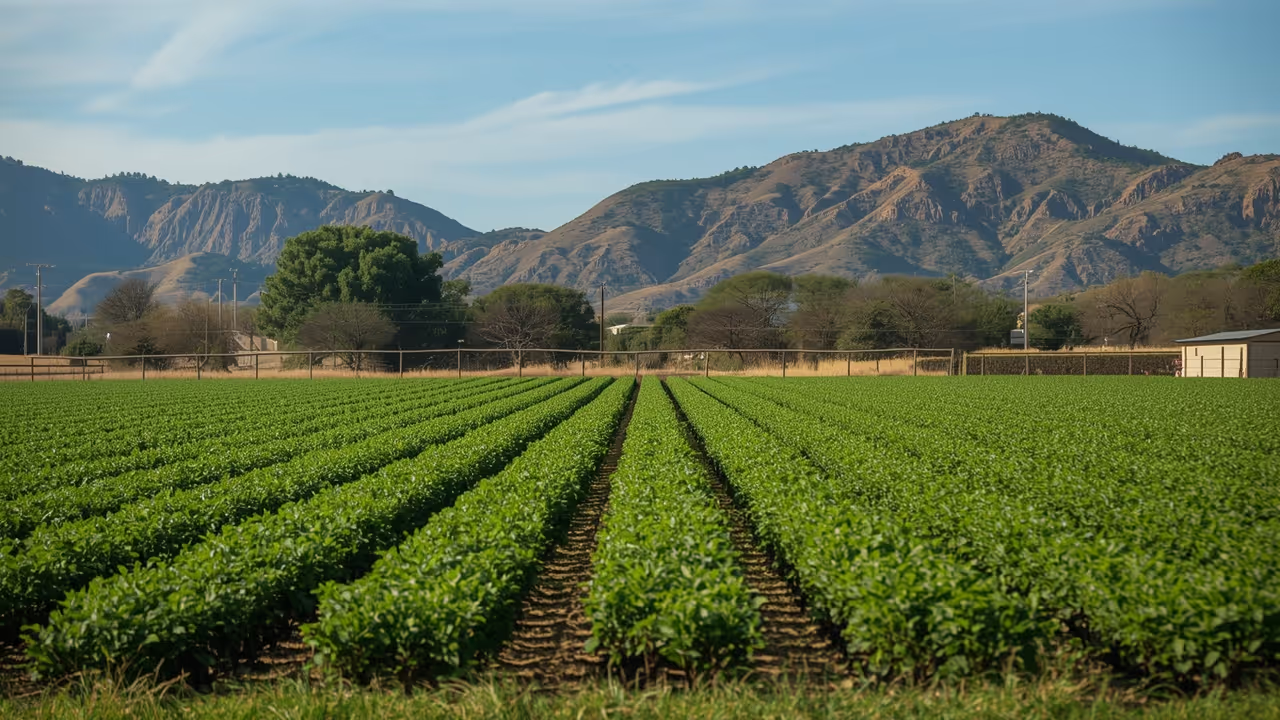
Tucson’s location in southern Arizona places students in one of the most geologically diverse regions in North America. Within short driving distances, geology students can study fault systems, volcanic fields, sedimentary basins, copper mining districts, and desert geomorphology. This makes Tucson especially attractive for hands-on geology and geoscience education.
Beyond natural features, Tucson hosts major research institutions, federally funded laboratories, and long-standing partnerships with agencies such as the U.S. Geological Survey and mining and environmental firms operating throughout the Southwest.
Top Geology and Geoscience Degree Programs in Tucson
1. University of Arizona – Department of Geosciences
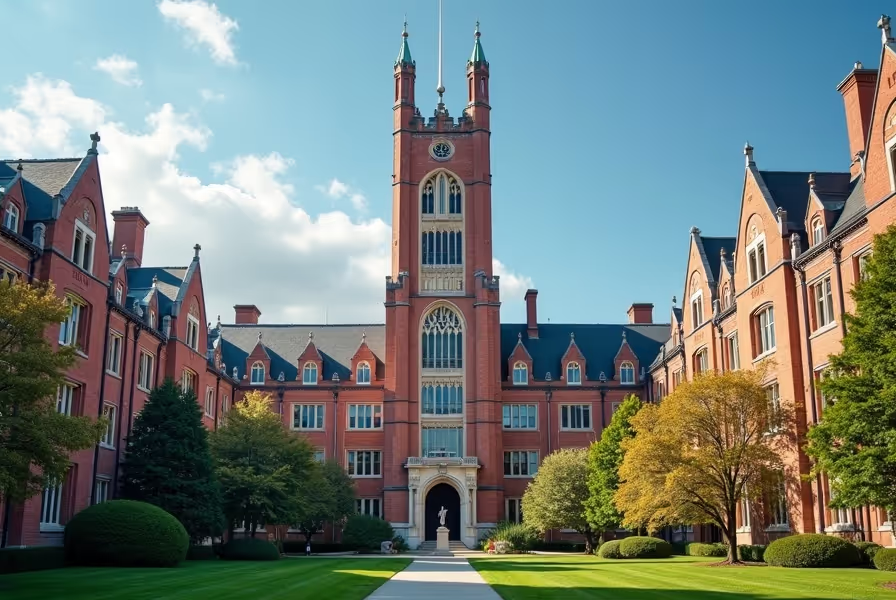
The University of Arizona (UA) offers the most comprehensive and highest-ranked geology and geoscience programs in Tucson. Its Department of Geosciences consistently appears in national rankings for earth science research, faculty impact, and graduate outcomes.
Degrees Offered
- BS in Geosciences
- BA in Geosciences
- MS and PhD in Geosciences
Program Highlights
- Specializations in geology, geophysics, geochemistry, hydrology, and paleontology
- Extensive field camps and required field-based coursework
- State-of-the-art labs including isotope geochemistry and geophysics facilities
- Strong undergraduate research funding and paid assistantships
UA geology students benefit from weekly field trips, active faculty research projects, and access to Arizona’s mining districts and national parks. Alumni frequently place into environmental consulting firms, graduate programs, and federal science agencies.
2. University of Arizona – Geological Engineering Program
For students seeking a more applied and engineering-focused path, UA’s Geological Engineering degree combines geology fundamentals with civil and mining engineering principles.
Degrees Offered
- BS in Geological Engineering
Program Highlights
- ABET-accredited engineering curriculum
- Focus on rock mechanics, groundwater, and environmental systems
- Strong preparation for professional licensure (PE and PG pathways)
This program is especially well-suited for careers in geotechnical engineering, mining operations, environmental engineering, and infrastructure development in arid regions.
3. Pima Community College – Geology and Earth Science Pathways
Pima Community College (PCC) serves as a cost-effective entry point for geology students in Tucson. While PCC does not offer a standalone geology bachelor’s degree, it provides transferable coursework aligned with UA and other Arizona universities.
Pathway Options
- Associate of Science with geology and earth science coursework
- General education and lab science requirements for transfer
Why Choose PCC
- Significantly lower tuition costs
- Small class sizes and strong advising support
- Established transfer agreements with the University of Arizona
PCC is a strong option for students seeking affordability and flexibility while working toward a four-year geoscience degree.
Side-by-Side Comparison of Tucson Geology Programs
Institution Degree Level Specializations Approximate Tuition (In-State) Best For University of Arizona Bachelor’s, Master’s, PhD Geology, Hydrology, Geophysics, Geochemistry $13,000 per year Research-driven geology careers University of Arizona Bachelor’s Geological Engineering $13,000 per year Engineering and applied geology Pima Community College Associate / Transfer Pathway Earth Science, Geology Foundations $2,500 per year Affordable transfer preparation
Admissions Requirements and Academic Expectations
University of Arizona
- High school diploma with college prep coursework
- Strong performance in math and laboratory sciences
- Graduate programs require GRE scores, faculty recommendations, and research statements
Pima Community College
- Open enrollment policy
- Placement testing for math and science readiness
Geology degrees are academically rigorous, with heavy emphasis on calculus, chemistry, physics, and intensive fieldwork.
Fieldwork, Internships, and Research Opportunities
One of Tucson’s biggest advantages is real-world geological exposure. UA geology students regularly participate in:
- Multi-week summer field camps across Arizona and neighboring states
- Internships with mining companies, environmental consultants, and government agencies
- Undergraduate and graduate research funded by NASA, NSF, and USGS grants
These opportunities significantly boost employability and graduate school placement.
Career Outcomes for Geology Graduates in Tucson
Graduates from Tucson-based geology programs work across Arizona and the Southwest in sectors such as:
- Environmental and groundwater consulting
- Mining and mineral exploration
- Geotechnical and civil engineering support
- Federal and state science agencies
- Graduate study and academic research
According to national labor data, geoscientists earn median salaries above $90,000 nationally, with strong demand in arid-region water management and environmental assessment.
How to Choose the Best Geology Degree in Tucson
- Research-focused careers: Choose the University of Arizona’s Geosciences program.
- Engineering and applied work: Geological Engineering offers professional licensure alignment.
- Affordability and flexibility: Start at Pima Community College and transfer.
The best geology degree in Tucson ultimately depends on your career goals, budget, and desired level of research or applied training. Tucson’s unique combination of academic excellence and geological diversity makes it one of the strongest places in the country to study earth sciences.
Frequently Asked Questions about Geology Degrees in Tucson
Is Tucson a good place to earn a geology degree?
Yes. Tucson gives you access to diverse desert geology, active mining districts, and major research labs. You can study faults, volcanoes, basins, and groundwater systems within a few hours’ drive, which is ideal for field-based geology training.
What is the difference between Geosciences and Geological Engineering at the University of Arizona?
Geosciences focuses on earth science research areas like geology, hydrology, geophysics, and geochemistry. Geological Engineering is an ABET-accredited engineering degree that blends geology with civil and mining engineering for applied work, licensure, and design-focused careers.
How can you start at Pima Community College and transfer into a geology major?
You can enroll in an Associate of Science pathway at Pima and complete math, chemistry, physics, and introductory geology. With advising, you match your courses to the University of Arizona transfer guides so you can move into a BS in Geosciences or Geological Engineering with junior standing.
What careers can you pursue with a geology degree from Tucson?
You can work in environmental consulting, groundwater and hydrogeology, mining and mineral exploration, geotechnical engineering support, or state and federal science agencies. Many graduates also continue into master’s or PhD programs for research and teaching roles.
What salary can you expect as a geologist after studying in Tucson?
National labor data for geoscientists report a median annual wage above $90,000, with strong demand in areas like water resources, mining, and environmental assessment. Your exact pay will depend on your degree level, years of experience, and sector (private, public, or academic).


.svg)


