


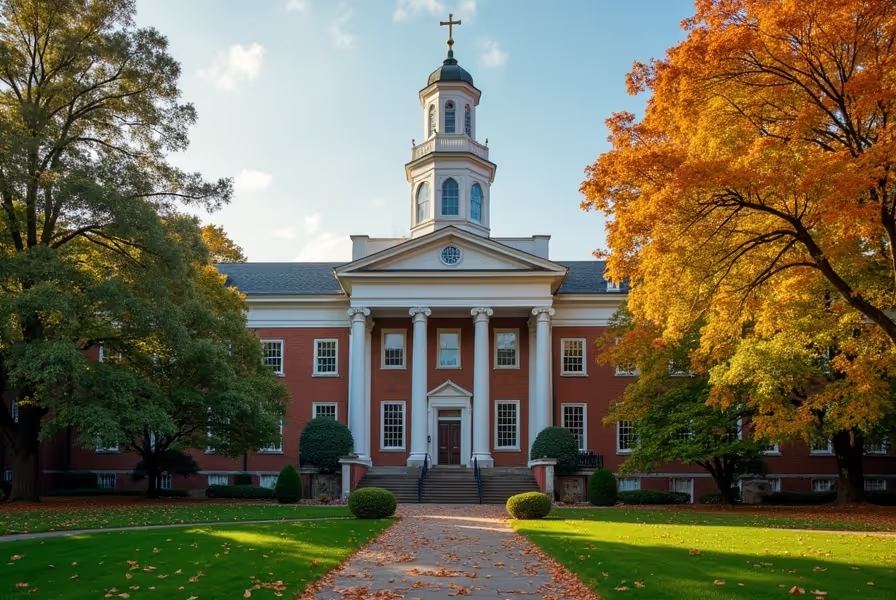
Explore Iconic HBCUs in Atlanta: Your Guide to Top Historically Black Colleges
Atlanta, Georgia, is not just the vibrant heart of the South. It's also a historical home for Black education and culture. If you are searching for the best Historically Black Colleges and Universities (HBCUs) in Atlanta, you are in the right place. These institutions offer rich traditions, academic excellence, strong alumni networks, and life-changing experiences.
Why Choose an HBCU in Atlanta?
Making the decision to attend an HBCU is both a personal and powerful choice. Atlanta is a magnet for Black talent. The city boasts a thriving culture, professional opportunities, and supportive communities. Here is why HBCUs in Atlanta stand out:
- They provide a nurturing and empowering learning environment.
- Students form lifelong bonds and receive unique mentorship.
- Rich history and civil rights legacy shape the campus spirit.
- Frequent networking with Black entrepreneurs, leaders, and executives.
- The Atlanta University Center Consortium, the world’s largest consortium of HBCUs, offers shared resources and social opportunities.
Top Historically Black Colleges in Atlanta
There are several HBCUs in Atlanta offering bachelor’s, master’s, and doctoral degrees. Let’s look at each renowned institution, what it’s known for, and its legacy.
Spelman College
Spelman College is one of the most celebrated HBCUs for women in the country. Founded in 1881, this private liberal arts college is dedicated to empowering women of color. Spelman is famous for producing leaders in education, STEM fields, business, and the arts.
- Ranked among top HBCUs in the USA
- All-women’s institution; men may attend through cross-registration
- Strong emphasis on global responsibility, leadership, and social change
- Notable alumnae: Alice Walker, Stacey Abrams, Rosalind Brewer
Morehouse College
When you talk about leadership, Morehouse College almost always comes up. Founded in 1867, it is America’s only historically Black, private, all-male liberal arts college. Morehouse has a stellar reputation for shaping leaders, activists, and visionaries.
- Produced notable alumni like Dr. Martin Luther King Jr., Spike Lee, Raphael Warnock
- Focuses on academic excellence, ethical leadership, and community service
- Strong programs in business, humanities, and STEM
- Active, supportive alumni network
Clark Atlanta University
Formed in 1988 by the merger of Atlanta University and Clark College, Clark Atlanta University (CAU) is both historic and innovative. It is a leading HBCU for business, communications, science, and public administration programs.
- Diverse degree offerings, from undergrad to doctoral levels
- Well-known for faculty research and student internships
- Key role in Atlanta’s Black arts scene and community outreach
- Active student organizations, Greek life, and athletics
Morris Brown College
Established in 1881, Morris Brown College has a rich, inspiring legacy. After facing accreditation challenges, the college now offers accredited programs and remains a pillar of the Atlanta University Center.
- Affordable tuition and innovative degree programs
- Focus on STEM, hospitality, psychology, and entrepreneurship
- Emphasis on student resilience and personal achievement
- Supportive, tight-knit campus culture
Benefits of Attending an HBCU in Atlanta
Being part of Atlanta’s HBCU community gives you access to unmatched resources and opportunities. Let’s look at the key benefits:
- Cultural Immersion: Take part in rich traditions, homecoming events, and organizations dedicated to Black excellence.
- Professional Connections: Network in Atlanta, a hub for Fortune 500 companies, tech startups, and non-profits focused on diversity.
- Academic Excellence: Access high-quality professors who support both personal and professional growth.
- Shared Resources: The Atlanta University Center allows cross-registration, shared libraries, and joint student activities across multiple HBCUs.
- Social Scene: Atlanta’s rhythm fuels student life, music, art, and community activism.
What to Look for When Choosing Your HBCU
If you are getting ready to apply to HBCUs in Atlanta, consider these important factors:
- Degree programs and accreditation (especially for STEM and business fields)
- Class size and student-to-faculty ratio
- Campus location and safety
- Internship and career placement support
- Opportunities for cross-registration within the Atlanta University Center
- Cost, financial aid, and scholarship availability
- Student life and extracurricular offerings
Career and Networking Opportunities for HBCU Grads in Atlanta
Atlanta is known as the “Black Mecca” because of its bustling job market and rich cultural heritage. HBCU graduates here become part of a strong, connected network. Major employers recruit directly from these colleges. Popular fields include:
- Engineering and Technology
- Nursing and Health Sciences
- Business and Finance
- Communications and Journalism
- Law and Public Policy
- Arts, Entertainment, and Media
Many HBCU grads become change-makers, entrepreneurs, and civic leaders in Atlanta and around the world. Their success highlights the transformative power of HBCU education.
Student Life and Campus Culture
Attending an HBCU in Atlanta is more than academics. Students live in a thriving community. Some highlights include:
- Historic homecomings, step shows, and Greek life
- Volunteering with local civil rights organizations and nonprofits
- Internships with Atlanta-based Black-owned businesses
- Connections with artists, musicians, and entrepreneurs across the city
- Supportive mentorship programs and student groups
Frequently Asked Questions About Atlanta HBCUs
What are the main HBCUs in Atlanta?
The main Historically Black Colleges and Universities (HBCUs) in Atlanta are Spelman College, Morehouse College, Clark Atlanta University, and Morris Brown College. These schools are part of the Atlanta University Center.
Are Atlanta HBCUs accredited?
Yes. Spelman College, Morehouse College, and Clark Atlanta University are fully accredited. Morris Brown College regained its accreditation in 2022 and now offers accredited degree programs as well.
What fields of study are popular at Atlanta HBCUs?
Students often pursue degrees in business, STEM (science, technology, engineering, math), the arts, psychology, and communication. Many HBCUs in Atlanta also offer strong programs in social sciences, education, and health services.
Is the Atlanta University Center Consortium important?
Yes. The Atlanta University Center Consortium (AUC) is the largest consortium of HBCUs in the world. It allows students to cross-register for classes, share resources, and participate in AUC-wide social and academic activities.
Do HBCUs in Atlanta have strong alumni networks?
Yes. Atlanta HBCUs are known for their powerful alumni networks. Graduates often find mentorship, internship, and career opportunities thanks to these connections.
How can I apply for scholarships at HBCUs in Atlanta?
Each college has its own scholarship application process. Start by filling out the FAFSA, then visit the financial aid pages of Spelman, Morehouse, Clark Atlanta, and Morris Brown for specific scholarships and deadlines.



.svg)


