


Key Takeaways
- Maine Maritime Academy (Castine) is the only ocean-focused campus located directly in Castine and offers highly experiential marine science education on the Gulf of Maine.
- University of Maine School of Marine Sciences delivers the most research-intensive oceanography pathway in the state with access to advanced marine laboratories and doctoral-level faculty.
- Top programs differ by specialization, hands-on vessel training, research funding, and career placement outcomes.
- Proximity to the Gulf of Maine provides unmatched fieldwork, internships, and employment opportunities in fisheries, environmental science, naval architecture, and ocean engineering.
- Students should compare faculty expertise, research infrastructure, tuition value, and graduate outcomes before choosing a program.
Why Study Oceanography in Castine, Maine?
Castine sits on Penobscot Bay along the Gulf of Maine, one of the fastest-warming marine ecosystems in the world. This region provides a natural laboratory for studying climate change, fisheries science, marine ecology, ocean circulation, and maritime operations. Students benefit from immediate access to coastal waters, research vessels, and commercial marine industries.
The Gulf of Maine supports major economic sectors including fishing, shipping, offshore energy, and environmental monitoring. According to the Gulf of Maine Council on the Marine Environment, the region’s ecological changes are heavily studied by academic institutions throughout Maine. This makes Castine and nearby campuses ideal for hands-on oceanography education.
Top Oceanography Programs Near Castine, Maine
Maine Maritime Academy (Castine, ME)
Location: Castine, Maine
Degrees: Marine Science (BS), Oceanography-focused coursework within marine and environmental programs
Institution Type: Public maritime college
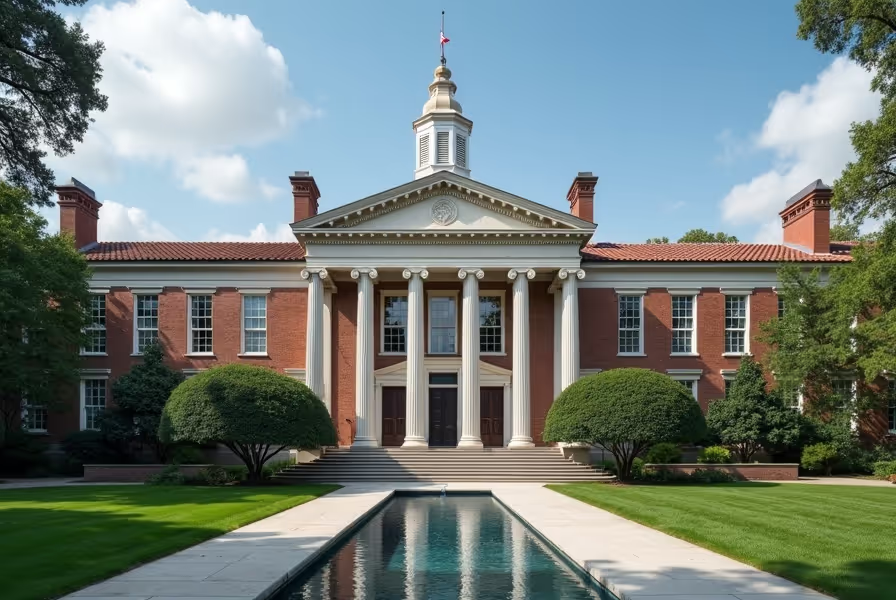
Maine Maritime Academy, located directly in Castine, is the most geographically relevant program for students specifically seeking oceanography education in this coastal town. The academy is known for blending applied marine science with operational maritime training.
What Makes MMA Stand Out
- Extensive shipboard training aboard the Training Ship State of Maine
- Direct access to Penobscot Bay for year-round field sampling
- Small class sizes with strong faculty mentorship
- Strong industry pipeline into maritime operations, environmental compliance, and marine transportation
Curriculum Strengths
The Marine Science program emphasizes:
- Physical and chemical oceanography
- Marine biology and ecology
- Oceanographic instrumentation
- Geographic Information Systems (GIS)
- Data analysis and marine policy
Students conduct coastal sampling, sediment analysis, and water chemistry assessments directly in surrounding marine environments. This applied foundation is particularly valuable for careers in marine resource management and environmental monitoring.
Career Outcomes
MMA publishes strong career placement statistics, with maritime and marine-related graduates frequently employed within months of graduation. Employers include federal agencies, environmental consultancies, vessel operations companies, and state marine departments.
Learn more at the official Maine Maritime Academy website.
University of Maine – School of Marine Sciences (Orono & Coastal Campuses)
Location: Orono, ME with coastal research facilities
Degrees: BS, MS, PhD in Marine Sciences
Institution Type: Public research university
The University of Maine School of Marine Sciences is widely recognized as the state’s most research-intensive marine science institution. While not located directly in Castine, it is approximately 40 miles away and deeply integrated into Gulf of Maine research.
Research Infrastructure
- Darling Marine Center in Walpole
- Advanced oceanographic instrumentation labs
- NOAA and NSF funded research projects
- Collaborations with regional marine institutes
The program excels in biological oceanography, fisheries science, marine policy, and climate change research. Faculty frequently publish in leading journals and secure federal research grants.
Ideal For Students Who Want
- Graduate-level oceanography research
- PhD pathways
- Federal agency careers such as NOAA or EPA
- Academic research positions
Program Comparison: Castine and Nearby Options
Feature Maine Maritime Academy University of Maine Location Castine (Coastal) Orono + Coastal Labs Primary Focus Applied Marine Science Research & Academic Oceanography Hands-On Vessel Training Extensive Moderate Graduate Degrees Limited MS & PhD Available Ideal Career Path Industry & Maritime Roles Research & Government
Hands-On Learning in the Gulf of Maine
One of the strongest advantages of studying near Castine is proximity to active marine research zones. The Gulf of Maine supports lobster fisheries, aquaculture operations, offshore wind studies, and long-term climate monitoring projects.
Students often engage with:
- Maine Department of Marine Resources research initiatives
- NOAA regional fisheries science programs
- Local aquaculture and coastal resilience projects
- Marine conservation nonprofits
This ecosystem provides internships that are not theoretical, but field-based and skill-intensive.
Tuition and Financial Considerations
Tuition varies depending on residency status and degree level.
- Maine Maritime Academy: Public tuition structure with lower in-state rates and maritime-focused scholarships.
- University of Maine: Competitive in-state tuition with strong research assistantship funding for graduate students.
Students should review each institution’s financial aid page and consider federal grants, work-study positions, and marine-specific scholarships.
Career Paths for Oceanography Graduates
Graduates from Castine-area oceanography programs pursue careers in:
- Marine environmental consulting
- Fisheries science
- Ocean data analysis
- Climate research
- Hydrographic surveying
- Naval and maritime operations
According to the U.S. Bureau of Labor Statistics, geoscientists, including oceanographers, earn competitive salaries with median pay exceeding $90,000 annually depending on specialization and experience.
How to Choose the Right Program
When comparing oceanography programs around Castine, focus on five deciding factors:
- Specialization: Do you want applied marine operations or research-intensive oceanography?
- Faculty Expertise: Review published research and areas of focus.
- Field Hours: Ask how many hours are spent on vessels or in coastal labs.
- Graduate Placement: Request employment data within six months of graduation.
- Research Access: Consider the availability of funded projects and lab facilities.
Students seeking hands-on maritime immersion often prefer Maine Maritime Academy in Castine. Students aiming for graduate research and academic careers may find greater flexibility at the University of Maine.
Frequently Asked Questions about Oceanography Programs near Castine, Maine
What is the main difference between Maine Maritime Academy and the University of Maine for oceanography?
Maine Maritime Academy focuses on applied marine science and shipboard training in Castine, while the University of Maine emphasizes research-driven marine science with BS, MS, and PhD options and large research projects funded by agencies such as NOAA and the National Science Foundation (NSF).
Why is the Gulf of Maine a strong place to study oceanography?
You study in one of the fastest-warming marine regions in the world, with active work in climate change, fisheries, and coastal ecology. The area supports key industries like fishing and offshore energy, and is closely monitored by groups such as the Gulf of Maine Council on the Marine Environment and the Maine Department of Marine Resources.
What careers can you pursue with an oceanography-related degree from this region?
You can work in marine environmental consulting, fisheries science, ocean data analysis, climate and ecosystem research, hydrographic surveying, or maritime operations. According to the U.S. Bureau of Labor Statistics, geoscientists, including oceanographers, earn median pay above $90,000 per year depending on role and experience.
How hands-on is the training at Maine Maritime Academy compared with the University of Maine?
At Maine Maritime Academy, you spend significant time on vessels like the Training Ship State of Maine and in local coastal waters. At the University of Maine, you gain field and lab experience through coastal research centers such as the Darling Marine Center, with more emphasis on research projects and data analysis.
How should you choose between an applied marine program and a research-focused oceanography program?
If you want immediate vessel time, maritime skills, and industry roles, an applied program like Maine Maritime Academy may fit you. If you plan to pursue a master’s, PhD, or a research career with agencies such as NOAA or universities, the research-focused paths at the University of Maine usually offer more graduate training and lab infrastructure.




.svg)


