


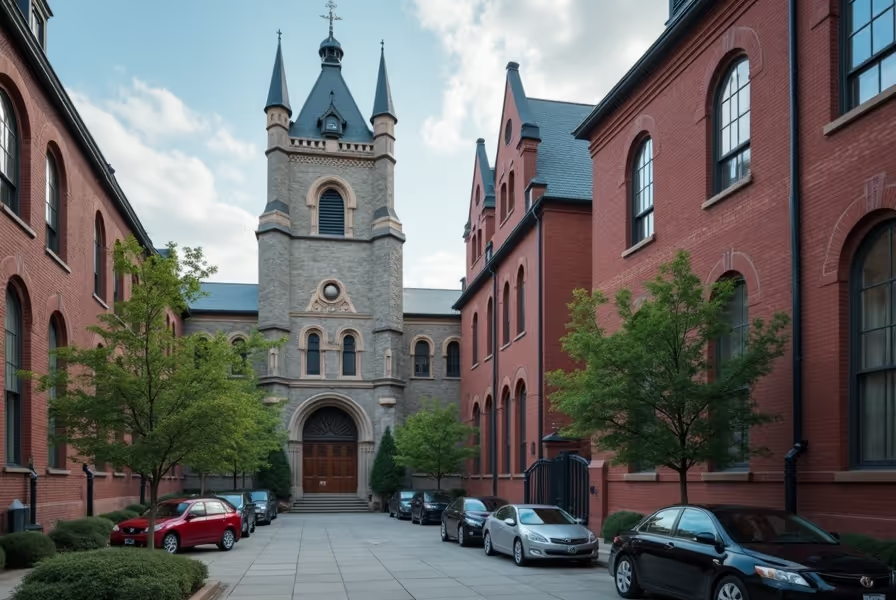
Exploring Top Psychology Degree Programs in Boston
If you're thinking about studying psychology, Boston is an inspiring place to launch your academic journey. With its vibrant student culture, top research institutions, and abundance of mental health resources, the city draws students from around the world. When searching for the best psychology colleges in Boston, understanding your options will help you find the perfect fit for your education and career goals.
Why Study Psychology in Boston?
- World-renowned universities: Boston is home to several leading psychology programs with deep research roots.
- Diverse internship opportunities: The city offers access to hospitals, counseling centers, research labs, and community clinics.
- Supportive campus communities: Boston's colleges foster diverse, inclusive environments in and outside the classroom.
- Career connections: Many colleges have strong ties to local employers, helping psychology majors start their careers or graduate studies.
Key Features to Look for in a Boston Psychology Program
Not all psychology departments are the same. Consider these important features as you compare bachelor’s in psychology, psychology graduate programs, and clinical psychology degrees in Boston:
- Faculty research expertise in your area of interest
- Hands-on research opportunities and internships
- Special programs in counseling, neuropsychology, or child development
- Study abroad options and diverse student clubs
- Graduate school or job placement rates after graduation
Leading Psychology Colleges and Universities in Boston
Boston is rich with excellent options for students pursuing a degree in psychology. Here’s a look at some top choices, whether you're seeking undergraduate or graduate psychology programs:
Harvard University
- Located in Cambridge, just outside Boston proper, Harvard offers world-class psychology bachelor’s and PhD programs.
- The department emphasizes research across social, developmental, cognitive neuroscience, and clinical areas.
- Harvard’s extensive alumni network and renowned faculty offer outstanding mentorship and post-graduation opportunities.
Boston University (BU)
- BU is known for its psychological and brain sciences department. Students can pursue undergraduate, master’s, and doctoral degrees.
- Programs offer specializations in behavioral medicine, neuropsychology, and clinical psychology.
- BU places a strong focus on real-world learning through collaborative research and clinical practicum experiences.
Northeastern University
- Northeastern stands out for its distinctive co-op program, which gives psychology majors hands-on, paid work experience with Boston’s clinics, schools, and firms.
- Undergraduate and graduate programs emphasize applied psychology, cognition, and developmental science.
- Students can choose electives in forensic psychology, health psychology, or counseling, tailoring the degree to their goals.
Boston College
- Boston College’s Department of Psychology and Neuroscience offers a thoughtful blend of research-driven and applied coursework.
- Undergraduates can earn a Bachelor of Arts or Bachelor of Science in Psychology.
- Graduate programs include both master’s and doctoral options, with special strengths in developmental and cognitive neuroscience.
Simmons University
- Simmons is well-regarded for its supportive environment and rigorous yet flexible bachelor’s in psychology program.
- Students can focus on areas like clinical, school, or industrial-organizational psychology.
- Internships and research with local health agencies are common for Simmons students.
Emmanuel College
- Emmanuel offers a well-rounded psychology major, featuring advanced electives in areas such as abnormal psychology, lifespan development, and experimental methods.
- The college is known for small class sizes and strong faculty mentorship.
- Graduates often pursue jobs in education, social work, counseling, and advanced psychology study.
How to Choose the Right Psychology Degree Program
When exploring Boston psychology colleges, think carefully about these steps:
- Visit campuses: Take tours, meet current psychology students, and connect with faculty.
- Compare curriculum: Some programs emphasize scientific and research skills. Others focus on counseling, education, or specializations like sports psychology.
- Consider practical training: Ask about internships, lab research, and cooperative education (co-ops).
- Evaluate campus life: Are there clubs, lectures, or organizations focused on mental health and psychology?
- Review graduate school prep: Does the college help with grad school applications or job placement?
Each of these Boston psychology schools provides different strengths, campus cultures, and post-graduation paths. With the city’s depth of options, you’re sure to find a program that matches your learning style and career goals.
Frequently Asked Questions About Studying Psychology in Boston
What are the admission requirements for psychology programs in Boston?
Admission to Boston psychology colleges usually requires a completed application, high school transcripts, standardized test scores (SAT or ACT for undergraduates), recommendation letters, and a personal statement. Graduate programs may require a bachelor’s degree, GRE scores, resume, and research or work experience.
Are there affordable psychology programs in Boston?
Boston has both private and public universities. While private colleges can be expensive, many offer significant financial aid. Students seeking affordability can explore UMass Boston or community colleges nearby for strong, lower-cost psychology programs.
What can I do with a psychology degree from a Boston college?
A psychology degree from a Boston college prepares you for careers in mental health counseling, research, social work, education, human resources, healthcare, and business. Many students also continue to graduate school for advanced psychology training or licensure as a psychologist.
What is the job outlook for psychology graduates in Boston?
Boston’s healthcare and research sectors create strong demand for psychology graduates. Fields like clinical psychology, counseling, data analysis, and social services are growing. The U.S. Bureau of Labor Statistics predicts job growth for psychology majors, especially in healthcare and education in the Boston area.
Which psychology specialization is most popular in Boston?
Clinical psychology is one of the most pursued specializations, but programs in neuropsychology, child development, and research psychology are also popular at Boston universities.


.svg)


