


Key Takeaways
- Ridgewater College in Willmar is the leading provider of agriculture technology education in the region, offering hands-on, industry-aligned two-year degrees.
- Programs emphasize precision agriculture, agribusiness management, and veterinary technology with strong employer partnerships.
- Students benefit from internships, transfer pathways to four-year universities, and access to modern ag technology tools.
- Nearby universities such as University of Minnesota Crookston and South Dakota State University provide additional advancement options.
- Willmar’s agricultural economy creates strong job demand in ag operations, equipment technology, data analysis, and agribusiness.
Why Willmar, Minnesota Is a Strategic Hub for Ag Technology Education
Willmar sits in the heart of west-central Minnesota, one of the most productive agricultural regions in the Midwest. According to the USDA National Agricultural Statistics Service, Minnesota consistently ranks among the top states for corn, soybeans, and livestock production. This concentration of production agriculture creates an ideal environment for agriculture technology education.
Students benefit from direct exposure to commercial farms, grain operations, dairy facilities, equipment dealers, and ag service providers. The result is education that is not theoretical but applied and employment-focused.
Top Agriculture Technology Programs in Willmar
1. Ridgewater College – Agriculture & Agribusiness Programs
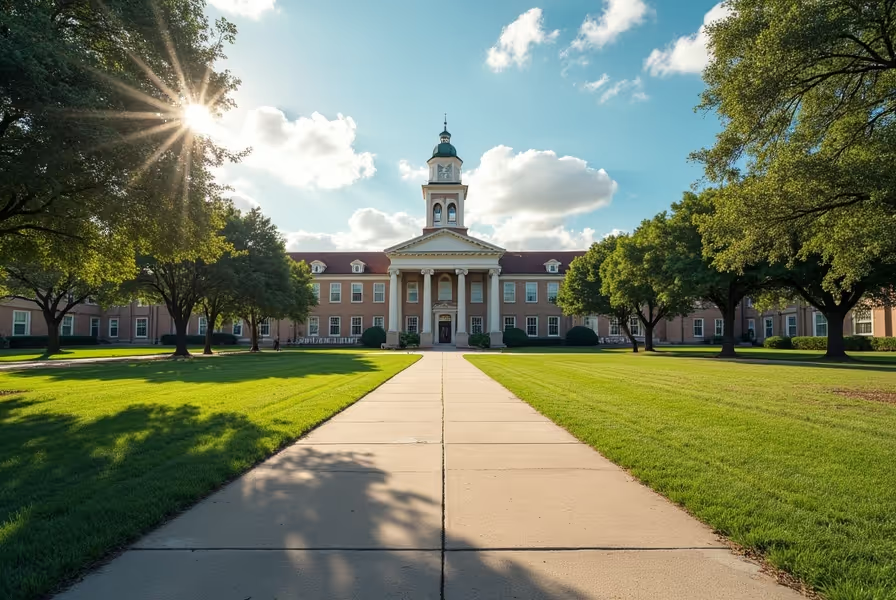
Ridgewater College is the primary agriculture technology institution in Willmar and consistently recognized for its workforce-aligned programs. As a Minnesota State institution, it offers affordable tuition, strong transfer pathways, and direct industry engagement.
Degrees and Credentials Offered
- AAS in Farm Operations & Management
- AAS in Agribusiness
- AAS in Veterinary Technology
- Diplomas and Certificates in Agriculture
What Makes Ridgewater Stand Out
- Hands-on learning: Students train in lab settings, with livestock, and in real-world agribusiness simulations.
- Industry partnerships: Local employers provide internships and advisory input.
- Career readiness: Programs are designed to meet regional employer demand.
- Transfer options: Seamless transfer to four-year institutions within Minnesota State.
Veterinary Technology graduates are eligible to sit for national credentialing exams, aligning with standards from the American Association of Veterinary State Boards.
Program Length and Estimated Costs
ProgramDurationCredentialEstimated Tuition (In-State)Farm Operations & Management2 YearsAAS Degree$5,500–$6,500 per yearAgribusiness2 YearsAAS Degree$5,500–$6,500 per yearVeterinary Technology2 YearsAAS Degree$6,000–$7,000 per year
Tuition estimates exclude housing and materials and are based on Minnesota resident rates.
Modern AgTech Integration in Willmar Programs
Agriculture today is driven by data, automation, and precision tools. Leading programs in and around Willmar integrate:
- GPS-guided equipment systems
- Yield monitoring and mapping software
- Farm management data platforms
- Agricultural drone applications
- Livestock health monitoring technologies
The American Farm Bureau Federation highlights precision agriculture as one of the fastest-growing segments of farm innovation. Students trained in these tools graduate with a competitive edge in both employment and farm succession planning.
Nearby Four-Year Options for Advancement
While Willmar excels in two-year applied programs, some students plan to pursue bachelor’s degrees. These institutions complement local education pathways:
University of Minnesota Crookston
UMN Crookston offers bachelor’s degrees in Agricultural Business, Agronomy, and Natural Resources. It is well known for combining technical skills with management training.
South Dakota State University
South Dakota State University provides comprehensive agricultural sciences programs and research opportunities. Many Minnesota students transfer here after completing two-year programs.
Students beginning at Ridgewater can often transfer a significant portion of credits, reducing overall bachelor’s degree costs.
Career Outlook for Agriculture Technology Graduates
Agriculture remains one of Minnesota’s largest industries. Employment pathways for ag technology graduates include:
- Farm manager or operations supervisor
- Precision agriculture technician
- Agribusiness sales representative
- Livestock production specialist
- Veterinary technician
- Agricultural equipment specialist
According to the U.S. Bureau of Labor Statistics, agricultural and food science occupations show steady demand, particularly for technicians trained in technology applications and management systems.
In the Willmar region specifically, agricultural employers consistently seek graduates who understand both traditional production and digital farm systems.
How to Choose the Right Agriculture Technology Program
1. Define Your Career Goal
If you plan to operate a farm, focus on Farm Operations & Management. If you prefer business, choose Agribusiness. If animal care is your priority, Veterinary Technology is the strongest pathway.
2. Evaluate Hands-On Opportunities
The best programs include labs, internships, and applied projects. Ask about equipment access, software training, and practical fieldwork requirements.
3. Compare Costs and Financial Aid
Minnesota residents benefit from affordable tuition at Ridgewater. Explore federal aid via Federal Student Aid and Minnesota state grants.
4. Assess Transferability
If a bachelor’s degree is your goal, confirm articulation agreements with four-year universities before enrolling.
5. Ask About Placement Rates
Strong programs maintain local employer networks. Inquire about internship placements and graduate employment outcomes.
Why Ridgewater Leads in Willmar
When evaluating agriculture technology programs specifically in Willmar, Ridgewater College stands out due to:
- Geographic proximity to active farms and agribusinesses
- Affordable, regionally accredited education
- Practical, employer-driven curriculum design
- Veterinary Technology accreditation alignment
- Clear pathways to four-year completion
Few rural colleges balance accessibility, industry collaboration, and modernization as effectively within a single campus.
The Future of Ag Technology Education in Central Minnesota
Agriculture is evolving toward automation, sustainability, and climate-resilient production systems. Programs that integrate environmental stewardship, precision inputs, and business analytics position graduates for long-term success.
Students entering agriculture technology in Willmar today are preparing for careers that merge biology, engineering, data science, and business management. The combination of regional economic relevance and evolving curriculum makes this area one of Minnesota’s most practical training grounds for the next generation of agricultural leaders.
Frequently Asked Questions about Agriculture Technology Programs in Willmar
What agriculture technology degrees can you earn in Willmar?
In Willmar, you can earn Associate of Applied Science (AAS) degrees in Farm Operations & Management, Agribusiness, and Veterinary Technology, along with shorter agriculture diplomas and certificates at Ridgewater College. These two-year programs focus on practical farm management, agribusiness skills, and animal care.
How long do Ridgewater agriculture programs take and what do they cost?
Most Ridgewater agriculture programs take about two years of full-time study. For Minnesota residents, estimated tuition is roughly $5,500–$7,000 per year, depending on the program, not including housing, books, and fees. You can check federal aid options through Federal Student Aid and review Minnesota grant programs before you enroll.
What kind of ag technology will you work with in these programs?
You work with GPS-guided equipment, yield monitoring and mapping tools, farm data platforms, drones, and livestock health monitoring systems. These tools match what many farms and ag businesses use today and reflect trends highlighted by groups like the American Farm Bureau Federation.
Can you transfer to a four-year agriculture program after Ridgewater?
Yes. Many students start at Ridgewater and then transfer to four-year schools such as the University of Minnesota Crookston or South Dakota State University. You can often transfer a large share of your credits, which may lower the total cost of a bachelor’s degree in agriculture or agribusiness.
What careers and job demand can you expect with an ag technology degree?
With an ag technology background, you can work as a farm manager, precision agriculture technician, agribusiness sales rep, livestock specialist, veterinary technician, or equipment specialist. The U.S. Bureau of Labor Statistics reports steady demand for agricultural and food science technicians, especially in roles that blend production skills with data and technology.



.svg)


