


Key Takeaways
- Wasilla-area students can access high-quality welding certification programs within commuting distance, especially in Palmer and Anchorage.
- The most recognized credentials in Alaska are American Welding Society (AWS) certifications.
- Top programs combine classroom learning, hands-on lab training, and employer-aligned testing.
- Entry-level certificates can be completed in as little as 3 to 12 months, while advanced degrees take up to 2 years.
- Alaska welders earn some of the highest wages in the U.S., with strong demand in construction, oil and gas, and pipeline industries.
Why Welding Certification Matters in Alaska
Alaska’s economy relies heavily on skilled trades. From oilfield infrastructure to marine fabrication and commercial construction, certified welders are critical to the state’s workforce. According to the U.S. Bureau of Labor Statistics, welders in Alaska earn significantly above the national average wage, reflecting strong demand and specialized skill requirements.
Employers in the Mat-Su Valley and greater Anchorage region often require credentials aligned with the American Welding Society (AWS). Certification validates technical ability, safety knowledge, and code compliance. For Wasilla residents, selecting the right training program is the first step toward a high-paying, stable career.
Top Welding Certification Programs Near Wasilla, Alaska
While Wasilla itself has limited in-city programs, high-quality options are available within a short commute. Below is a detailed comparison to help you choose the best fit.
SchoolLocationProgram LengthCredentialBest ForUniversity of Alaska Anchorage – Mat-Su CollegePalmer, AK1–2 YearsOccupational Endorsement Certificate (OEC) / AASStructured college pathwayUniversity of Alaska Anchorage (UAA)Anchorage, AK9 Months – 2 YearsWelding & Nondestructive Testing CertificatesAdvanced technical trainingAVTEC – Alaska’s Institute of TechnologySeward, AK11 MonthsCertificateIntensive hands-on trainingAWS Testing FacilitiesStatewideVariesAWS CertificationExperienced welders testing out
1. Mat-Su College (Palmer)
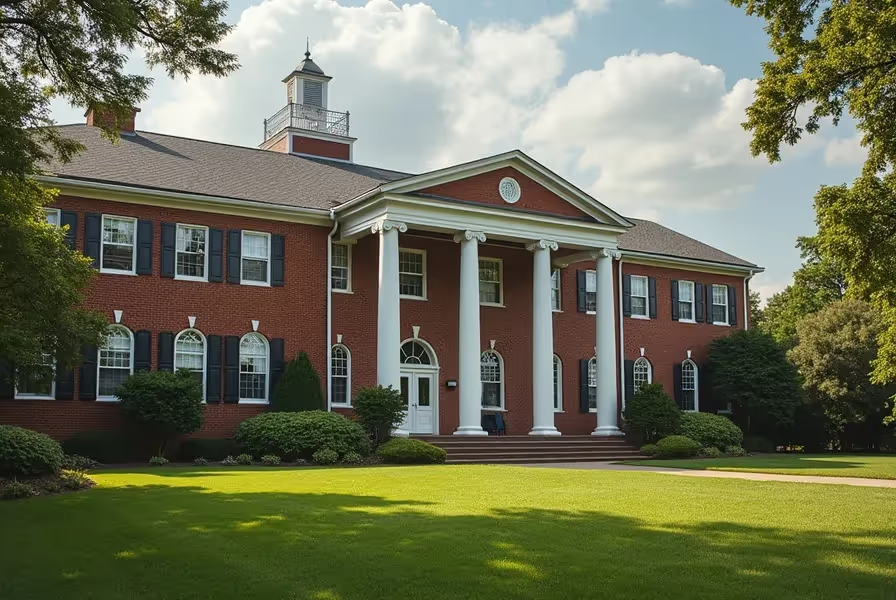
Just 15 minutes from Wasilla, Mat-Su College offers one of the most accessible welding programs for local residents. Students can pursue an Occupational Endorsement Certificate or an Associate of Applied Science degree.
The curriculum includes:
- Shielded Metal Arc Welding (SMAW)
- Gas Metal Arc Welding (GMAW)
- Gas Tungsten Arc Welding (GTAW)
- Blueprint reading and welding inspection basics
- Safety and OSHA-aligned procedures
This program is ideal for students who want structured academic progression and financial aid eligibility through federal programs.
2. University of Alaska Anchorage (Main Campus)
UAA provides one of Alaska’s most comprehensive welding technology programs. It integrates welding with nondestructive testing and inspection preparation.
Advantages include:
- Advanced fabrication labs
- Preparation for AWS certification exams
- Industry-connected faculty
- Expanded career pathways into inspection or quality control
For Wasilla residents willing to commute about 45 minutes, this program offers strong employer recognition.
3. AVTEC – Alaska’s Institute of Technology
Located in Seward, AVTEC delivers an intensive 11-month welding program designed to meet employer demand. Training replicates real-world job environments.
Students gain experience in:
- Pipe welding
- Structural welding
- Industrial fabrication
- Industry code standards
This program suits students ready for a full-time immersive experience.
Understanding Welding Certifications in Alaska
Choosing the right credential is just as important as choosing the right school.
AWS Certified Welder
The AWS Certified Welder program is performance-based. Welders must pass a practical exam at an accredited test facility. This certification is widely recognized across construction, oil and gas, and marine industries.
Occupational Endorsement Certificate (OEC)
Often offered through Alaska community colleges, the OEC is designed for entry-level employment and can usually be completed in under one year.
Associate of Applied Science (AAS)
An AAS degree combines technical welding skills with general education courses. This is beneficial for long-term career growth or future supervisory roles.
Admission Requirements
Most programs require:
- High school diploma or GED
- Minimum age of 18
- Placement testing or basic math proficiency
- Physical ability to lift materials and work in shop settings
No prior welding experience is typically required for entry-level programs.
Tuition and Financial Aid Options
Costs vary by institution and residency status. Alaska residents often receive in-state tuition rates. Federal Pell Grants, Alaska Performance Scholarships, and workforce grants may apply.
Students can explore federal aid options at StudentAid.gov. AVTEC and University of Alaska campuses also offer institutional aid programs.
Career Outlook for Welders in Wasilla and Mat-Su Valley
The demand for certified welders remains strong due to infrastructure development, pipeline maintenance, and commercial construction projects. According to the Alaska Department of Labor and Workforce Development, skilled trades continue to see stable job growth statewide.
Entry-level welders may start between $25 and $35 per hour in Alaska. Experienced pipe welders and specialty welders can exceed $40 per hour depending on certification and project type.
Industries hiring in the region include:
- Oil and gas operations
- Commercial construction firms
- Marine shipyards
- Mining operations
- Heavy equipment repair facilities
How to Choose the Right Welding Program
Use this checklist to evaluate your options:
1. Career Goal Alignment
Do you want to work in structural welding locally, or pursue pipeline or oilfield work? Choose a program that offers relevant training modules.
2. Certification Preparation
Confirm whether the program prepares you directly for AWS certification testing.
3. Hands-On Lab Time
More booth hours typically mean stronger welding proficiency. Ask how many hours are spent welding versus classroom study.
4. Employer Connections
Programs with strong regional employer partnerships often lead to faster job placement.
5. Commute and Schedule
Wasilla residents should factor travel time to Palmer, Anchorage, or Seward when selecting a campus.
Apprenticeships and On-the-Job Training
Some students pursue apprenticeships through local unions or contractors after completing certification. Apprenticeships allow you to earn while you learn and gain specialized experience.
The Alaska Department of Labor Apprenticeship Program provides resources for registered apprenticeship opportunities.
Training Facilities and Equipment Standards
High-quality welding programs invest in industry-standard equipment, including:
- Modern welding booths
- Pipe-positioning rigs
- CNC plasma cutting systems
- Inspection and testing tools
Before enrolling, schedule a campus tour and inspect the condition of labs and fabrication areas.
Next Steps for Becoming a Certified Welder in Wasilla
Start by identifying your career goal and budget. Visit campuses within commuting distance, compare tuition and lab facilities, and confirm which certifications are included in training. Apply for financial aid early and plan for any placement testing requirements.
Alaska consistently rewards skilled welders with strong wages and career stability. With the right certification program near Wasilla, you can enter one of the state’s most resilient and high-demand trades.
Frequently Asked Questions about Welding Certification near Wasilla, Alaska
How long does it take to get welding certified near Wasilla?
Entry-level welding certificates at schools near Wasilla usually take about 3 to 12 months to finish. Programs that lead to an Associate of Applied Science (AAS) degree can take up to 2 years of full-time study. The Mat-Su College and University of Alaska Anchorage both offer options within this time range.
Which welding certifications are most important in Alaska?
In Alaska, the most recognized welding credentials are American Welding Society (AWS) certifications. Many employers also value school-based credentials like Occupational Endorsement Certificates (OEC) and AAS degrees from the University of Alaska system and AVTEC.
How much can you earn as a welder in Alaska?
Many entry-level welders in Alaska start around $25–$35 per hour, and experienced pipe or specialty welders can earn $40 per hour or more. You can review current wage data for welders on the U.S. Bureau of Labor Statistics site and through the Alaska Department of Labor.
Do you need experience before starting a welding program?
You usually do not need prior welding experience for entry-level programs. Most schools ask for a high school diploma or GED, basic math skills, and the physical ability to work safely in a shop. Details are listed in each school’s admission section, such as on the UAA welding program page.
How can you pay for welding school in Alaska?
You can combine in-state tuition, federal financial aid, and state or workforce grants. Many students start with the Free Application for Federal Student Aid (FAFSA) at StudentAid.gov and then check for Alaska Performance Scholarships or institutional aid at schools like Mat-Su College and AVTEC.



.svg)


